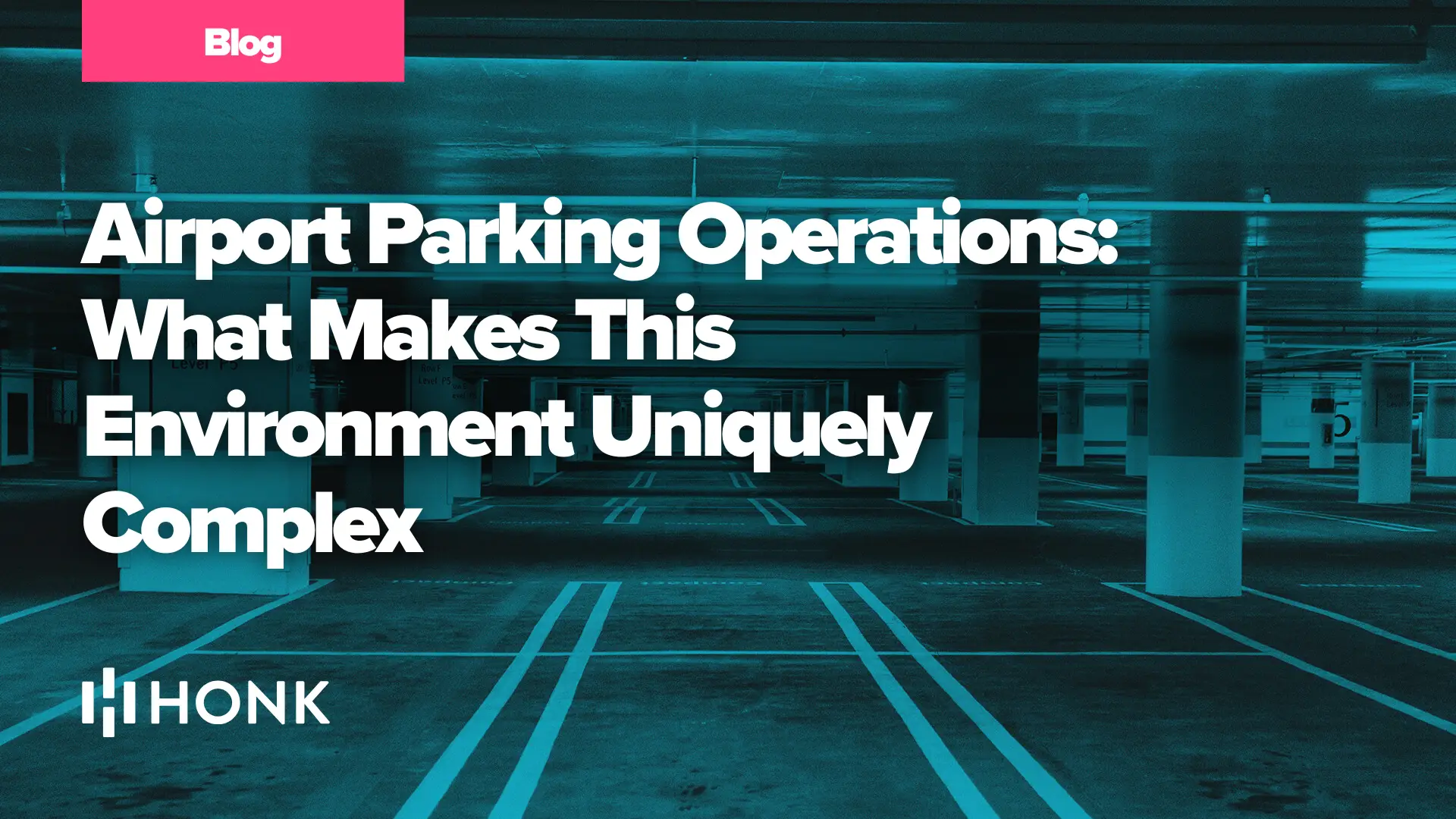
Airport parking sits among the most operationally complex parking environments in the industry, combining extreme volume, time-sensitive customer behavior, multiple pricing tiers, and a customer base under real time pressure to catch a flight or reunite with arriving passengers. Understanding what makes this environment distinct is the starting point for building parking operations that actually serve it well.
The Time-Pressure Factor
Unlike almost any other parking environment, a significant portion of airport parking transactions happen under genuine time pressure. A traveler running late for a flight has a fundamentally different tolerance for payment friction than a shopper at a retail lot, and every second spent navigating a complicated exit process compounds the stress of an already time-sensitive situation.
This reality should drive every operational decision in airport parking, from payment method design to exit lane configuration. Reducing friction at the exit is not simply a convenience improvement. It is central to how well an airport parking operation actually serves the population it exists to serve.
Multiple Product Tiers Serving Different Traveler Needs
Airport parking operations typically offer several distinct product tiers: short-term parking for quick drop-offs and pickups, daily and long-term parking for travelers leaving vehicles during a trip, and premium or valet options for travelers willing to pay more for proximity and convenience. Each tier has different pricing logic, different turnover expectations and different customer service requirements.
Managing this tiered structure well requires a platform capable of applying different pricing rules, different duration calculations and different payment flows across each tier simultaneously, while still giving operators unified visibility across the full facility for occupancy and revenue reporting.
Reservation and Pre-Booking Demand
A substantial share of airport parking demand comes from travelers who want to reserve a specific space or rate before they arrive, particularly for longer trips where cost certainty matters and availability at peak travel periods can be genuinely limited. Pre-booking systems that let travelers reserve parking in advance, often at a discount compared to walk-up rates, capture this demand while giving operators valuable advance visibility into expected occupancy for a given date.
This advance visibility has real operational value beyond the revenue itself: knowing expected occupancy days or weeks ahead allows airport parking operators to plan staffing, anticipate capacity constraints during high-travel periods like holidays, and make informed decisions about overflow parking arrangements when demand approaches capacity.
Exit Speed as a Core Operational Metric
Exit lane throughput is one of the most closely watched operational metrics at any airport parking facility, since a slow exit process creates backups that extend into the facility itself and, in severe cases, onto airport roadways. Every second saved per transaction at the exit compounds across thousands of daily transactions during peak travel periods.
Digital payment methods that allow travelers to pay before they even reach the exit lane, whether through a mobile app, a QR code payment completed while walking to their vehicle, or a pre-authorized payment method linked to a reservation, dramatically reduce the time spent at the actual exit gate compared to a payment transaction conducted at the point of exit itself.
Loyalty and Frequent Traveler Programs
Frequent business travelers represent a disproportionately valuable segment of airport parking revenue, and many airport parking operations have built loyalty programs specifically designed to retain this segment against competition from off-airport parking alternatives and rideshare options. Digital platforms that track frequent traveler activity and apply loyalty benefits automatically, without requiring manual enrollment verification at each visit, make these programs meaningfully easier to operate at scale.
Competing With Off-Airport and Rideshare Alternatives
Airport parking operators increasingly compete not just with other on-airport facilities but with off-airport parking lots, rideshare services and other ground transportation alternatives that travelers weigh against the cost and convenience of parking directly at the terminal. A parking experience burdened by payment friction, confusing pricing or slow exit processes pushes marginal travelers toward these alternatives, while a fast, transparent, digitally-enabled parking experience gives travelers a genuine reason to choose on-airport parking despite a potential cost premium.
How HONK Supports Airport Parking Operations
HONK’s platform supports the multi-tier, high-volume, time-sensitive demands of airport parking operations: reservation and pre-booking capability, mobile and QR code payment that speeds exit throughput, and the analytics infrastructure that helps operators understand utilization patterns across tiers and adjust pricing and capacity planning accordingly.
To learn more about how HONK supports airport parking operations, visit honkmobile.com and explore additional operator resources at honkmobile.com/blog. Airport parking has to work for travelers under real time pressure. The right platform makes that possible at scale.